

Breast reduction (reduction mammaplasty) is a surgical procedure that removes excess breast tissue, fat, and skin to create a breast size that feels more proportional, and often dramatically more comfortable, while also lifting and reshaping the breasts for a natural, balanced look. At The Collins Center, Dr. Beth Collins (fellowship-trained and double board-certified) approaches breast reduction as both functional relief and aesthetic refinement, which is why many patients seek her out when they’re ready to stop managing symptoms like shoulder grooving, skin irritation, and the “always heavy” feeling, and start feeling like themselves again.
Before / After Gallery
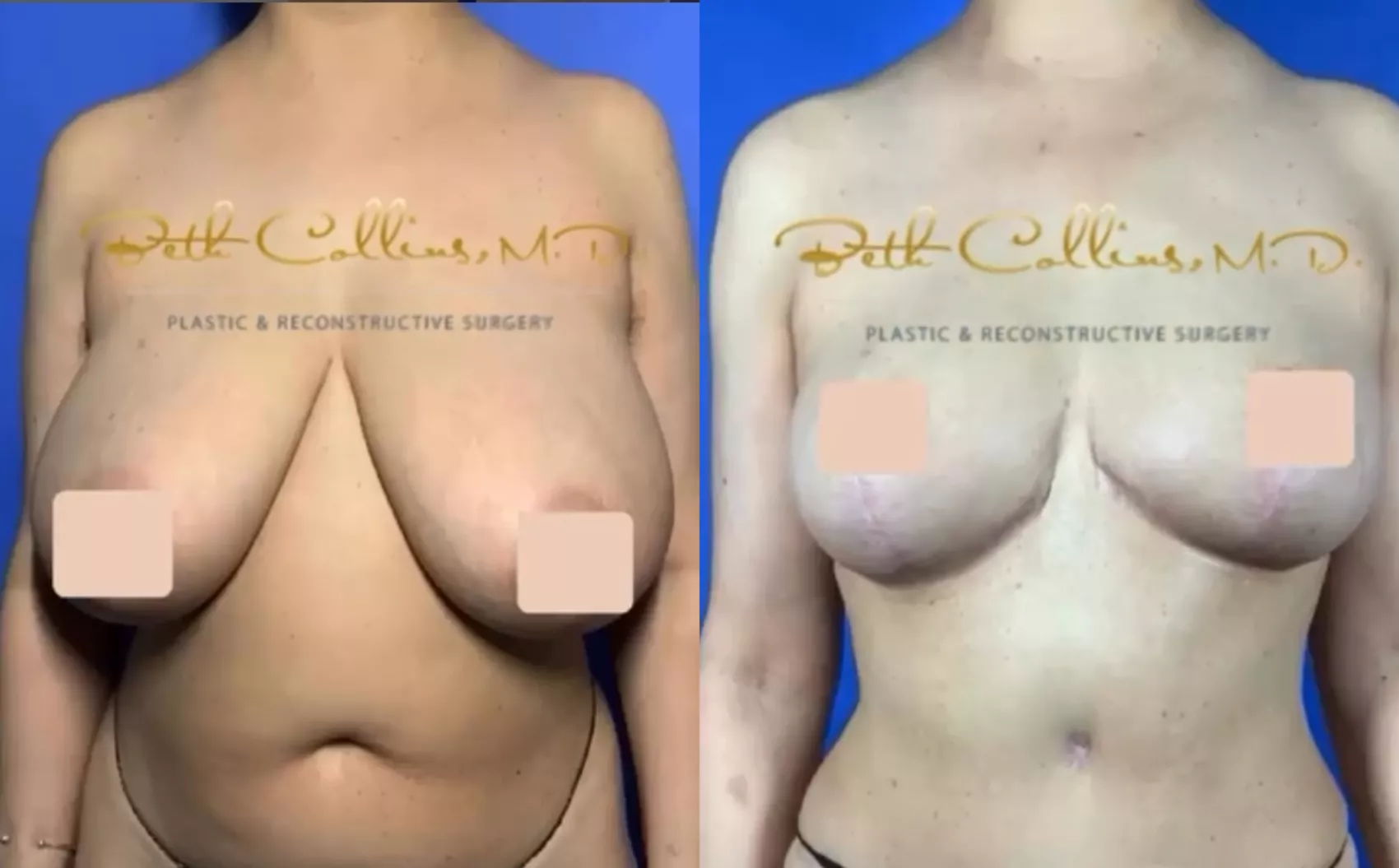
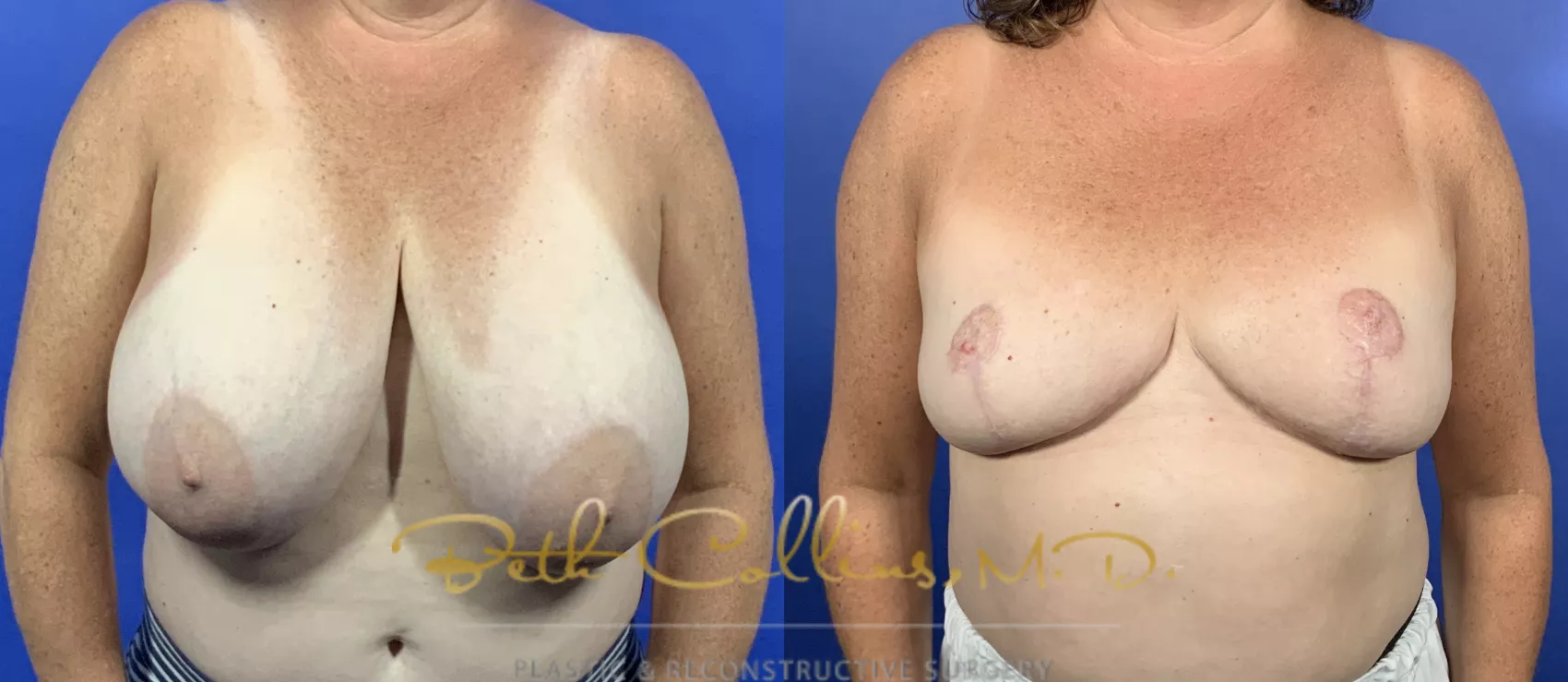
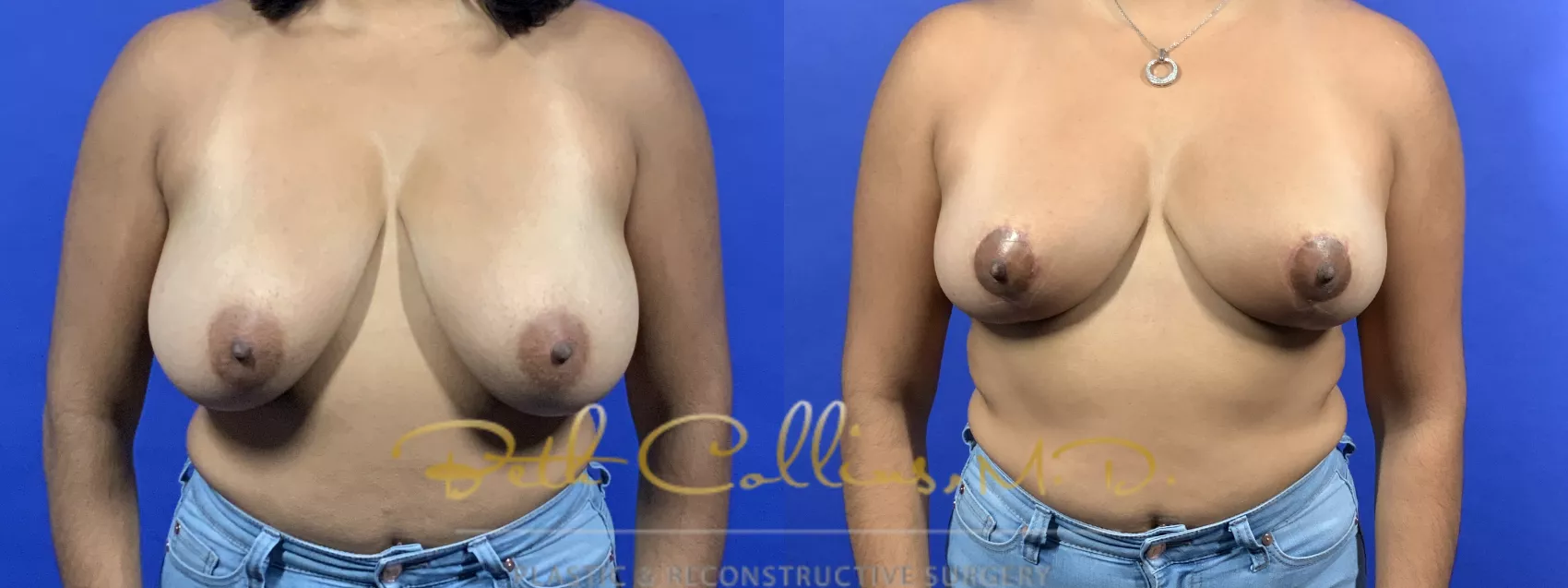
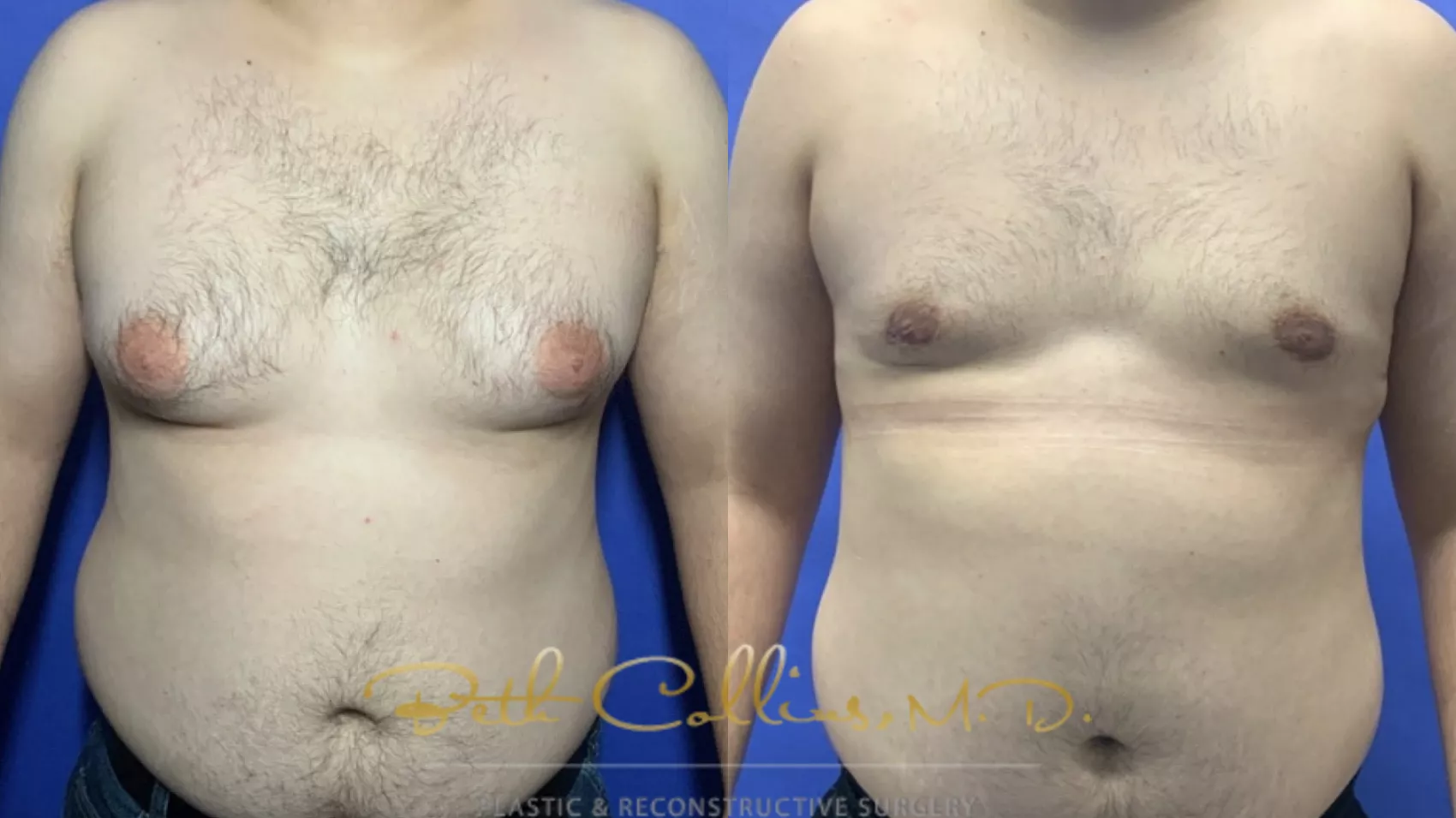
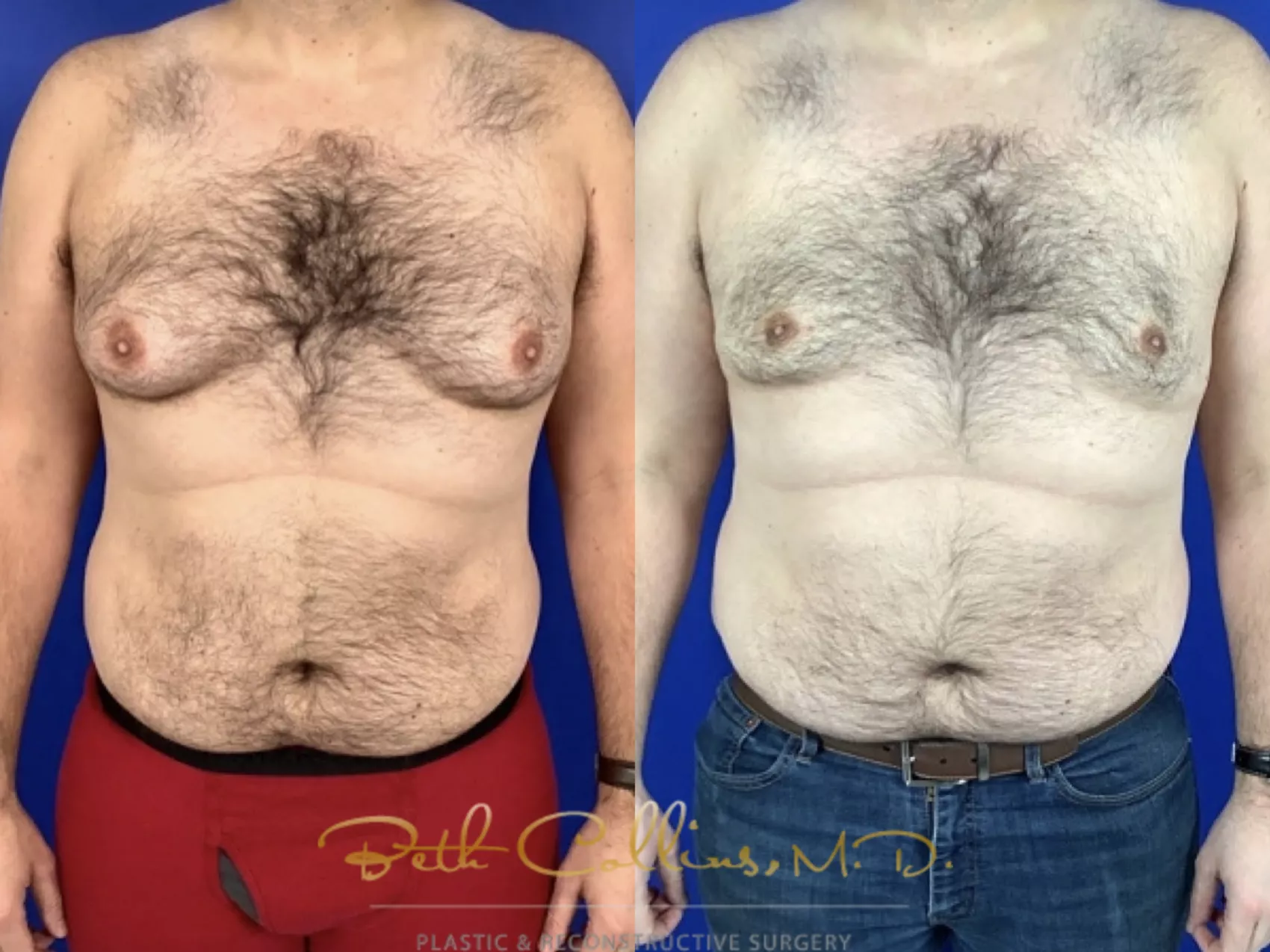
Breast reduction results are often instantly “felt” as well as seen, patients typically describe standing taller, moving easier, and feeling more comfortable in everyday clothes and workouts once the weight is lifted. The gallery highlights the kind of change The Collins Center prioritizes: lighter, lifted breasts with a natural shape that fits your frame (not an overdone or generic look).
Treatable Areas
- Heavy, enlarged breasts (macromastia).
- Neck, upper back, and shoulder discomfort related to breast weight.
- Painful shoulder grooves from bra straps.
- Under-breast skin irritation and rashes (intertrigo).
- Breast asymmetry (one breast significantly larger than the other).
- Low, stretched breast position (ptosis) that affects shape and support.
How Breast Reduction Works
Breast reduction is essentially a “reset” for both size and structure: excess tissue is removed, the breast is reshaped, and the nipple-areola complex is typically moved to a higher, more youthful position while staying connected to its blood supply and nerves whenever possible. In many cases, the areola can also be reduced to better match the new breast size and proportions.
Think of it like tailoring, except instead of fabric, the goal is to reduce weight, improve balance, and rebuild support so your breasts sit in a more comfortable, stable position on your chest. Depending on your anatomy and your goals, liposuction may be used as part of the reduction plan to refine shape in a conservative, controlled way.
Whether you need surgical precision, metabolic wellness, or non-surgical refinement, we look at the big picture. Let’s design a unified treatment plan that addresses your health and beauty under one roof.

Results You’ll Love
- Feeling lighter and more comfortable in your day-to-day life.
- Less pulling on your neck, shoulders, and upper back.
- Fewer under-breast rashes and skin irritation.
- Easier movement during exercise and daily activities.
- Better bra fit (and often, more supportive options).
- A lifted, reshaped breast contour that looks proportionate to your frame.
Are You a Candidate for Breast Reduction?
- You feel physically weighed down by breast size (pain, pressure, or fatigue).
- You have bra-strap grooving, posture strain, or recurrent skin irritation.
- You avoid certain clothes or activities because your breasts feel uncomfortable or too prominent.
- You want a result that’s smaller, lifted, and naturally shaped (not flattened).
- You’re generally healthy and able to follow a structured recovery plan.
- You want clear education and a realistic plan, no “salesy” promises.
Why Choose The Collins Center
- Physician-led care rooted in proven medical science, no trendy shortcuts, just thoughtful planning and dependable technique.
- Dr. Collins is double board-certified (general surgery + plastic surgery), bringing deeper surgical judgment to a procedure that blends function and aesthetics.
- A consult experience built around education: you’ll leave with a clear roadmap aligned with your anatomy, your lifestyle, and your goals.
- Safety-forward protocols and meticulous surgical standards are treated as non-negotiable.
- A warm, professional team trained to support you before surgery, through recovery, and beyond.
FAQs about Breast Reduction
How long is the downtime after breast reduction?
Most patients need a couple of weeks away from work and busy life responsibilities, and many return to broader normal activity by about 4–6 weeks depending on healing and job demands.
How long does a breast reduction appointment (surgery day) take?
Breast reduction is performed in the operating room under anesthesia, and total surgery time varies based on your anatomy and complexity.
What should I do to prepare for breast reduction surgery?
Preparation typically includes a detailed medical history review, discussion of pregnancy/breastfeeding plans, weight stability, smoking status, and prior breast history so your surgical plan is as safe and predictable as possible.
What happens during the procedure?
Incisions are used to remove excess tissue and skin, then the breast is reshaped and the nipple-areola complex is repositioned to a more lifted location in most cases.
Will breast reduction lift my breasts too?
Yes, breast reduction commonly includes reshaping and elevating the breast (and often the nipple) as part of creating a smaller, more supported contour.
Will I be able to breastfeed after a breast reduction?
Breastfeeding may be reduced or not possible for some patients after reduction surgery, so it’s important to discuss future plans during your consultation.
Will breast reduction help with back/neck pain?
Large breasts are associated with symptoms like neck and upper back pain and shoulder discomfort, and studies report many patients experience meaningful symptom improvement after reduction.
Book a consultation at The Collins Center to explore a breast reduction plan designed around your body, your goals, and real-life relief.