

A deep plane facelift is a highly advanced facial rejuvenation surgery. It goes deeper than just tightening the skin; it releases and repositions the ligaments that hold facial tissues in place. This technique works beneath the skin’s muscle layer (SMAS), accessing the area where aging changes happen. It releases ligaments in the cheeks to lift them, in the jaw area to reduce jowls, and in the neck to create a smoother neckline. Unlike simpler facelifts that pull the skin, which can look unnatural, a deep plane facelift moves facial fat and muscles vertically back to their younger positions, restoring volume and contour from the inside out.
Dr. Beth Collins is one of the few surgeons in Connecticut who expertly performs this demanding procedure. She teaches it to other surgeons at conferences and performs one to two facelifts each week in Guilford and Mystic. With 25 years of experience and over a thousand procedures, she’s honed the precision, anatomical knowledge, and artistic skill needed for this transformative surgery.
Before / After Gallery
Deep plane facelifts offer a more natural look than older methods. Results show youthful vitality without a stretched appearance. Our photos show how repositioning facial structures creates higher cheeks, more defined jawlines, flatter necks, and a refreshed appearance.
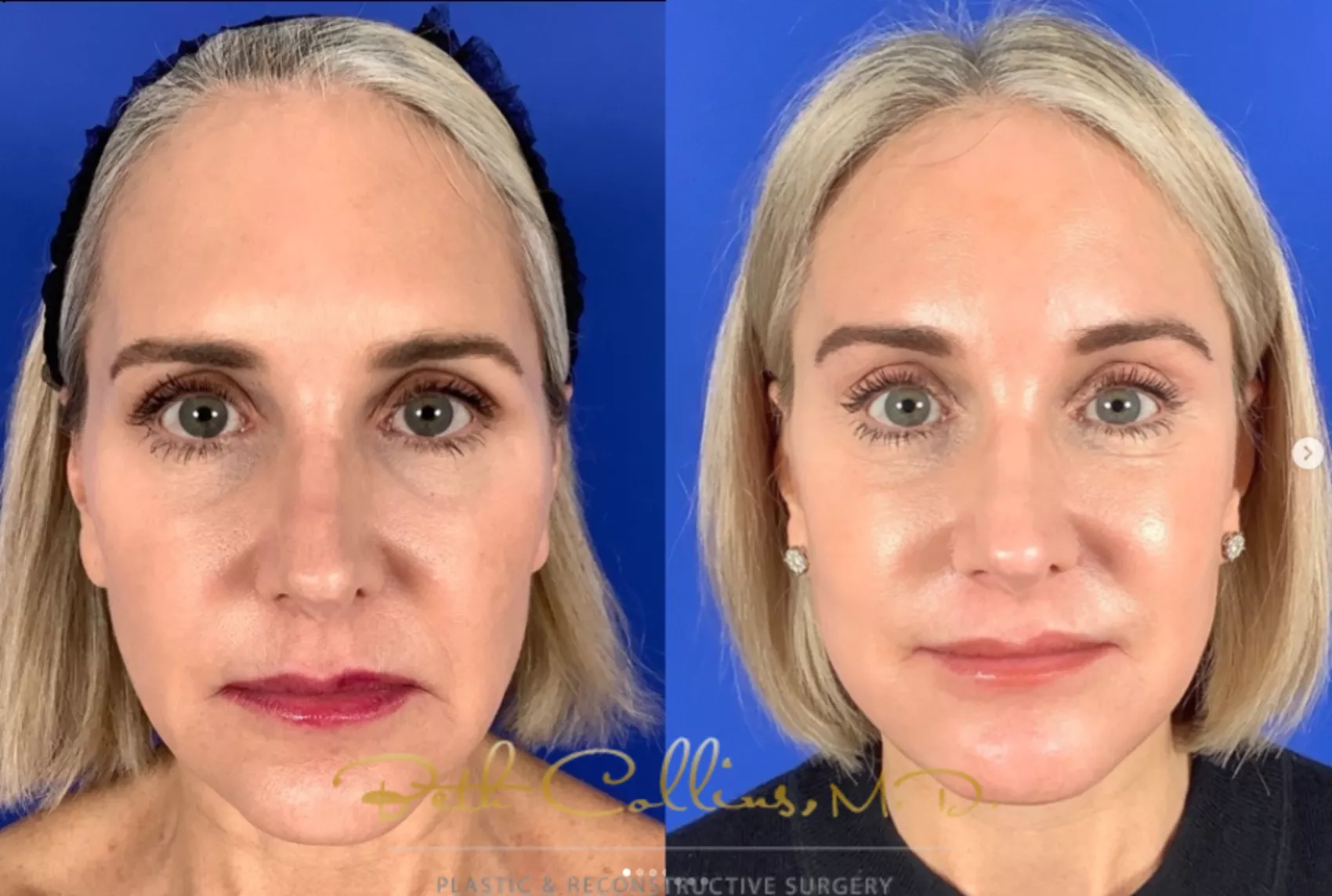
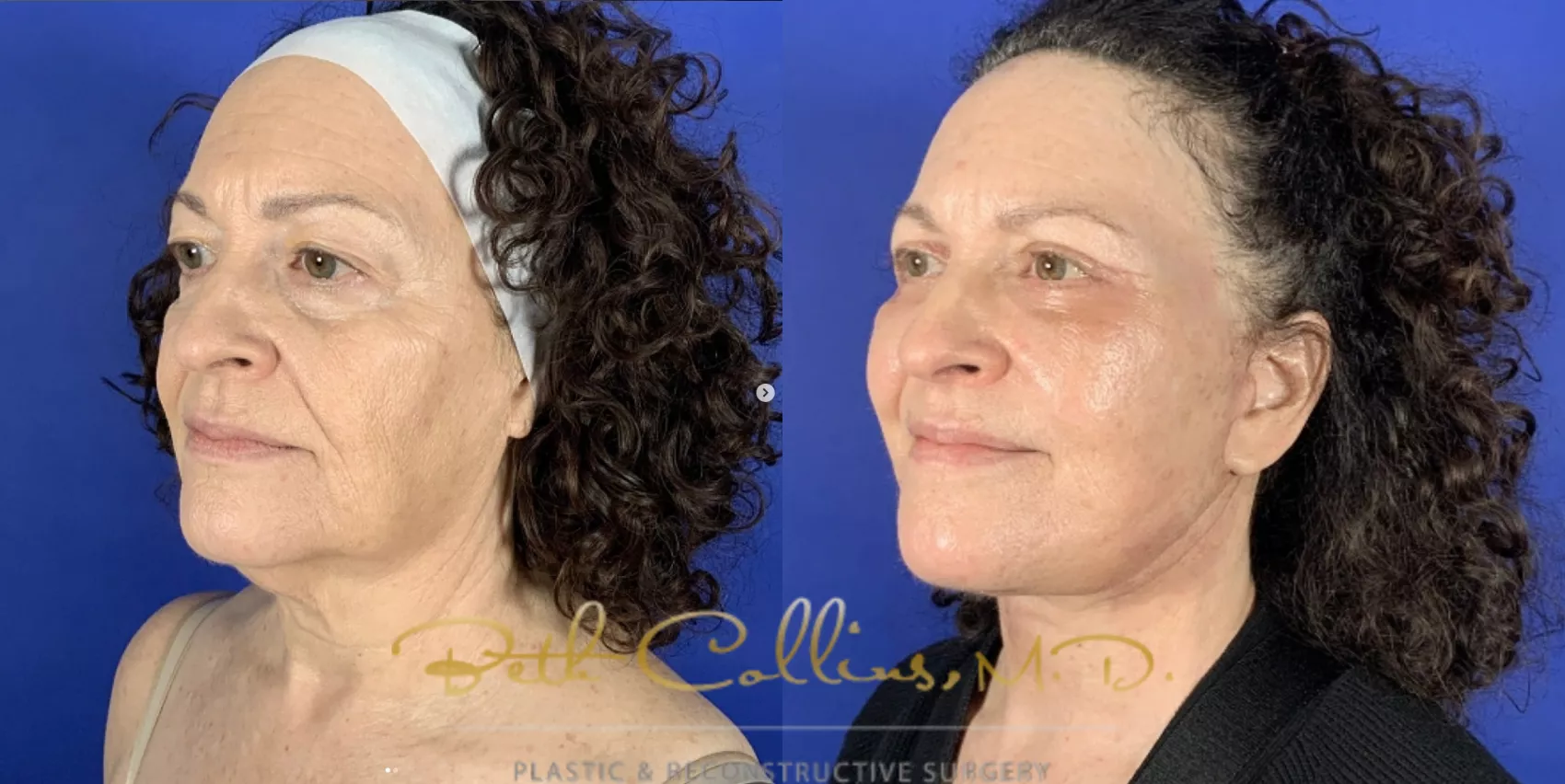
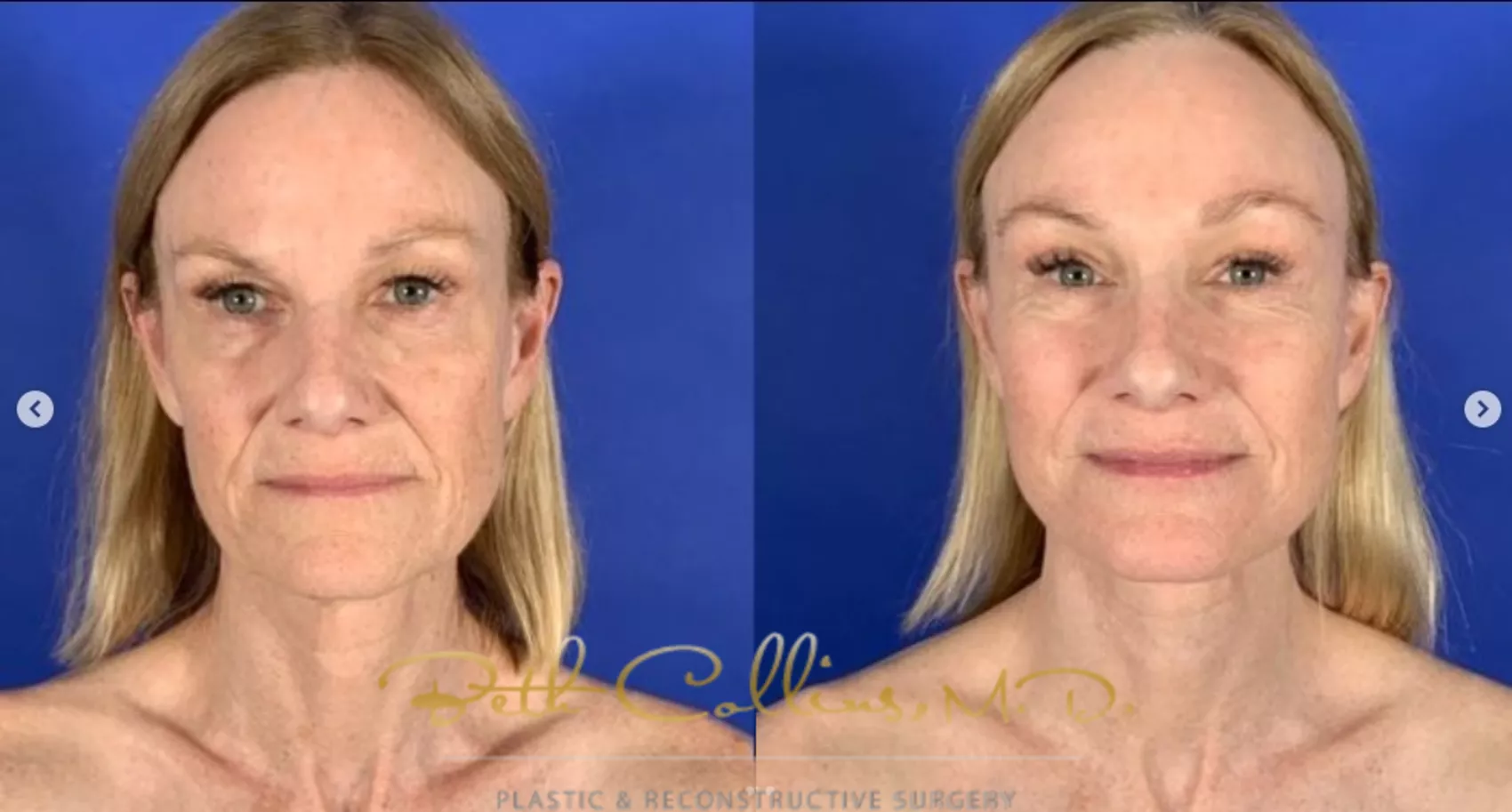
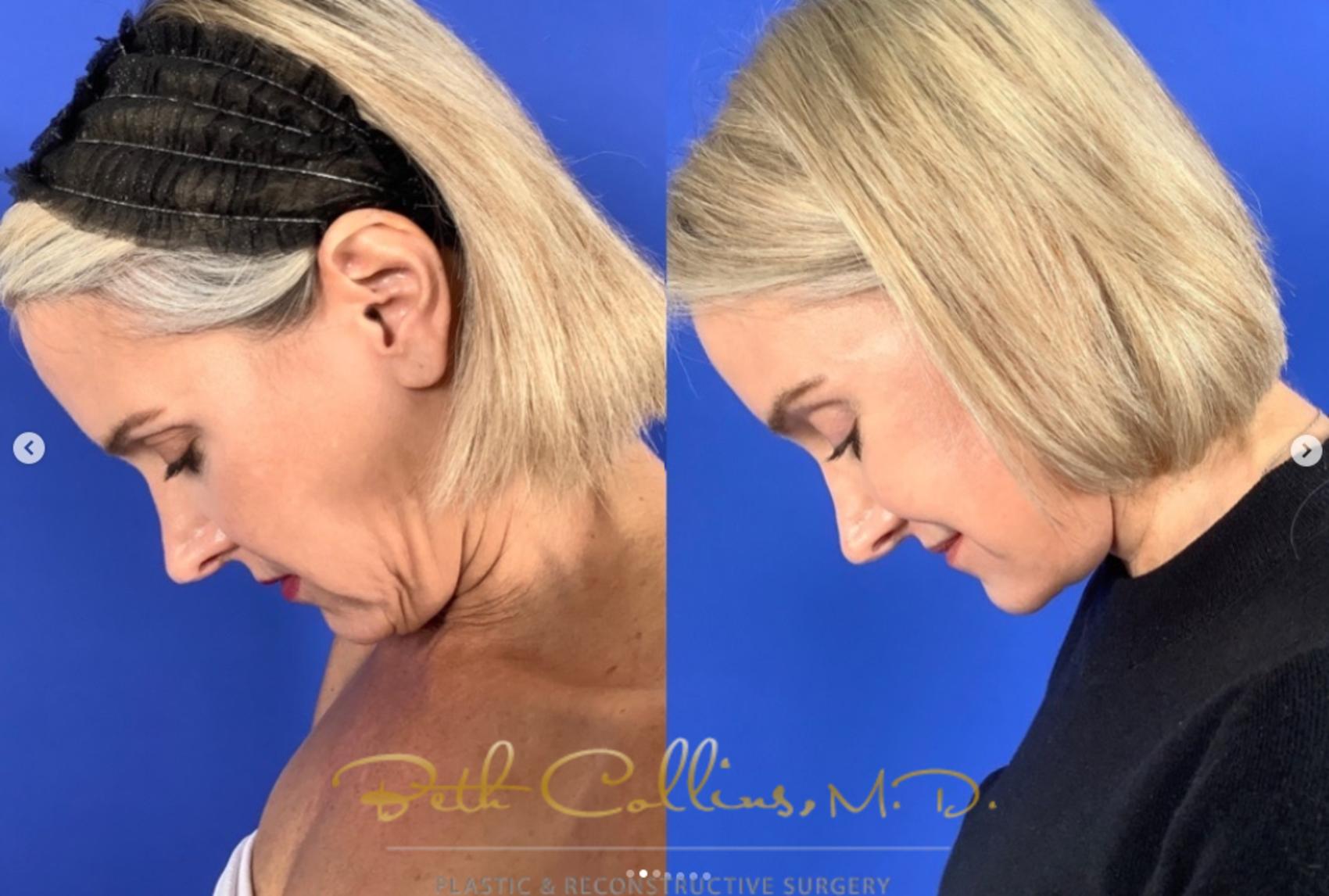
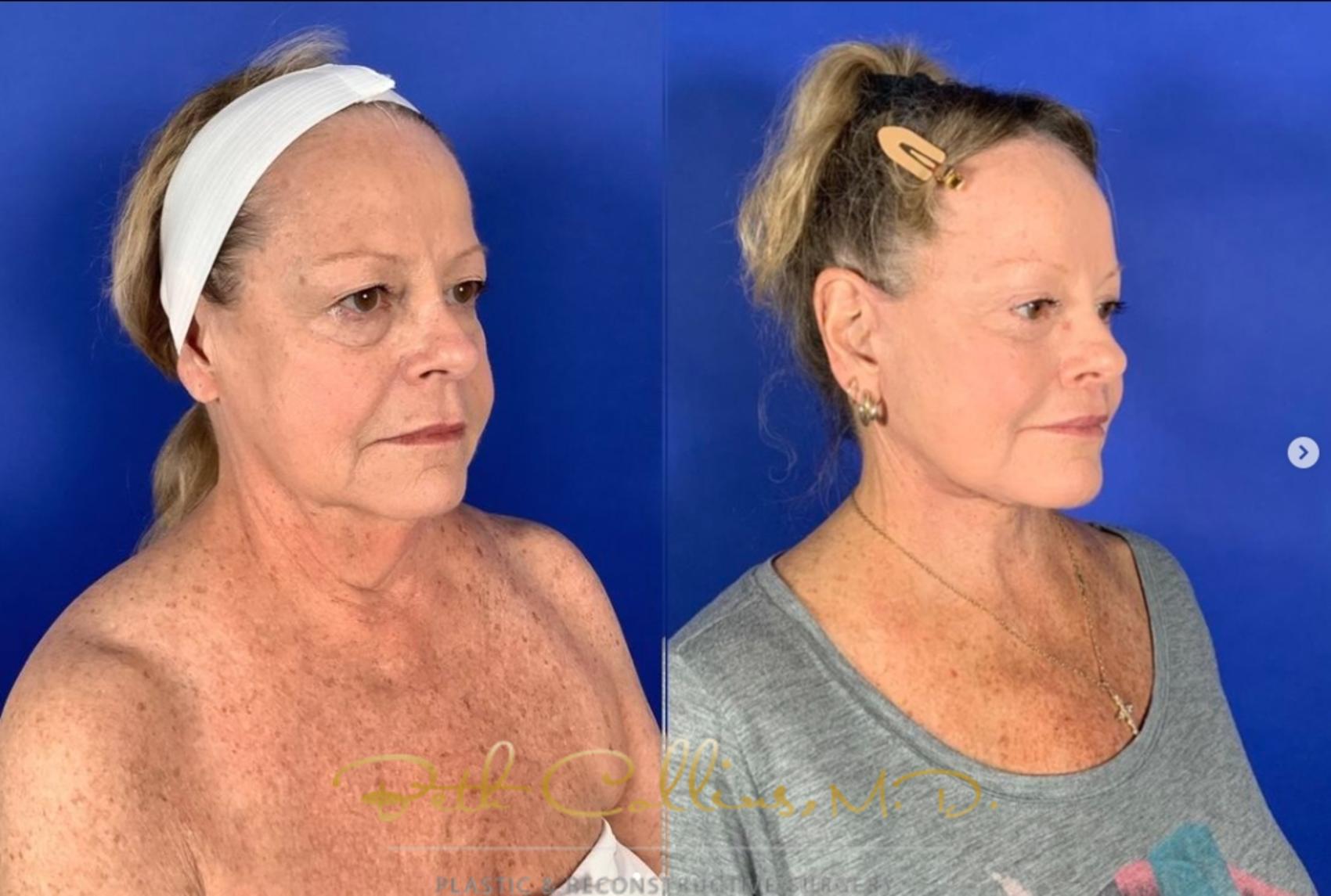
Facial Concerns Addressed by Deep Plane Facelift
- Descended cheek fat pads creating midface hollowing and flattening
- Zygomatic ligament tethering preventing natural cheek elevation
- Jowl formation along the jawline from masseteric ligament attachment
- Deep nasolabial folds extending from nose to mouth
- Under-eye hollowing and tear trough shadows
- Platysmal banding and cervical ligament tethering in the neck
- Mandibular border obscured by descended tissues
- Loss of the youthful heart-shaped facial contour
How Deep Plane Facelift Works
The key difference in this approach is understanding that aging involves ligaments releasing, causing fat pads to drop. Traditional facelifts pull skin, but this method fixes the underlying issue by accessing the layer below the SMAS where these ligaments are located. Small incisions are made along the hairline and around the ears, then the SMAS layer is separated to reach the deep plane.
Accessing this layer allows for targeted release of four important ligament groups. This lifts cheeks, restoring volume permanently, and improves jawline definition. Neck rejuvenation is achieved by releasing cervical ligaments, which also tightens neck muscles.
Lifting tissues as a unit avoids pulling the skin, leading to natural-looking results. The face moves naturally, and aging appears graceful because changes happen beneath the skin. The surgery usually takes three to four hours under anesthesia, and patients typically go home the same day after a short observation.
Whether you need surgical precision, metabolic wellness, or non-surgical refinement, we look at the big picture. Let’s design a unified treatment plan that addresses your health and beauty under one roof.

Results You’ll Love
- Restored cheek projection and heart-shaped youthful facial contours without filler or implants
- Dramatic improvement in nasolabial folds through structural repositioning rather than surface pulling
- Brightened under-eye area as elevated cheeks reduce hollowing and shadowing
- Sculpted, defined jawline free from jowls with crisp mandibular border visibility
- Natural facial movement and expression preserved through tension-free lifting
- Results lasting 15 years or longer due to structural rather than superficial correction
- Elegant neck contours without visible banding or platysmal cords
- The confidence of choosing Connecticut’s most advanced facelift technique from a nationally recognized expertHomepage.pdf
Are You a Candidate for Deep Plane Facelift?
- You have moderate to significant midface volume loss and cheek flattening
- Your jowls and descended facial tissues create an aged appearance that bothers you
- You desire the most comprehensive, long-lasting facelift results available
- You want natural-looking rejuvenation without the pulled or windswept appearance
- You’re seeking a surgeon who performs this advanced technique regularly, not occasionally
- You understand this procedure requires specialized expertise beyond traditional facelift training
- You’re willing to invest in superior surgical technique for optimal outcomes
- You’re in excellent health with realistic expectations about advanced facial surgery
Why Choose The Collins Center
- Nationally recognized expert in deep plane facelift teaching techniques to surgeons nationwide. Dr. Collins speaks at the American Society of Plastic Surgery and Women’s Plastic Surgery Conference, demonstrating her mastery of this technically demanding procedure to other physicians.
- 25+ years performing 1–2 facelifts weekly with over a thousand procedures completed. This extraordinary repetition has built the precision, confidence, and refined aesthetic judgment that deep plane facelift demands—experience few Connecticut surgeons can match.
- Fellowship-trained at Emory University in advanced facial rejuvenation techniques. Dr. Collins’ specialty training following her double board certification provided intensive education in sophisticated procedures like deep plane lifting.
- Clinical instructor at Yale and founder of Coastal Aesthetic Training Institute. Dr. Collins trains surgical residents and teaches injectable techniques to physicians, reflecting the medical community’s recognition of her exceptional surgical expertise.
- Castle Connolly Top Doctor and Best Plastic Surgeon in New Haven. These awards reflect the consistent excellence, safety record, and patient satisfaction that define Dr. Collins’ practice.
FAQs about Deep Plane Facelift
What makes deep plane facelift superior to traditional techniques?
Deep plane facelift releases the actual ligaments tethering your facial tissues and repositions descended fat pads at their structural source, rather than simply tightening superficial layers. This creates more natural results with greater longevity because the correction addresses anatomical causes of aging, not just symptoms. The tension-free closure preserves natural facial movement and prevents the pulled appearance associated with older techniques.
Why don’t all plastic surgeons perform deep plane facelifts?
Deep plane facelift requires advanced training, extensive anatomical knowledge, and significant surgical experience because the dissection occurs near facial nerves in deeper tissue layers. Many surgeons lack the specialized education and practice volume necessary to safely master this technically demanding procedure. Dr. Collins’ fellowship training, 25 years of weekly facelift procedures, and role teaching other surgeons make her uniquely qualified.
Does deep plane facelift eliminate the need for cheek fillers?
Yes, for most patients. By releasing zygomatic ligaments and repositioning your natural cheek fat pads to their youthful height, deep plane technique restores volume equivalent to approximately three syringes of filler—but permanently, using your own tissue. This structural approach creates natural-looking fullness that ages gracefully with your face rather than requiring ongoing injectable maintenance.
Is deep plane facelift recovery longer than traditional facelift?
Recovery timelines are similar, though some surgeons report less bruising and swelling with deep plane due to the tension-free closure technique. Most patients experience two weeks of social healing, returning to work within 10 to 14 days and resuming exercise after four to six weeks. The benefit lies not in faster recovery but in superior, longer-lasting results.
How long do deep plane facelift results last?
Deep plane results typically last 15 years or longer—significantly exceeding traditional facelift longevity—because the correction occurs at the structural level where facial ligaments and fat pads reside. While your face continues aging naturally, the architectural improvements remain, keeping you looking years younger than if you’d never had surgery.
Can deep plane facelift be combined with other procedures?
Absolutely. Many patients combine deep plane facelift with eyelid surgery, fat grafting, laser resurfacing, or other rejuvenation treatments to achieve comprehensive facial transformation. Dr. Collins will assess your aging concerns and recommend the combination that optimizes your outcome while maintaining safety standards.
What credentials should I look for in a deep plane facelift surgeon?
Seek a board-certified plastic surgeon with fellowship training in facial surgery who performs facelifts regularly—ideally weekly—and has extensive experience specifically with deep plane technique. Dr. Collins performs one to two facelifts every week, has completed over a thousand procedures, and teaches deep plane techniques to other surgeons at national conferences—credentials that ensure exceptional expertise.
Trust your face to a surgeon who’s dedicated her career to mastering the art and science of deep plane rejuvenation. Schedule your consultation with Dr. Collins at our Guilford or Mystic, CT locations today.