
By Dr. Beth Collins, double board-certified plastic surgeon
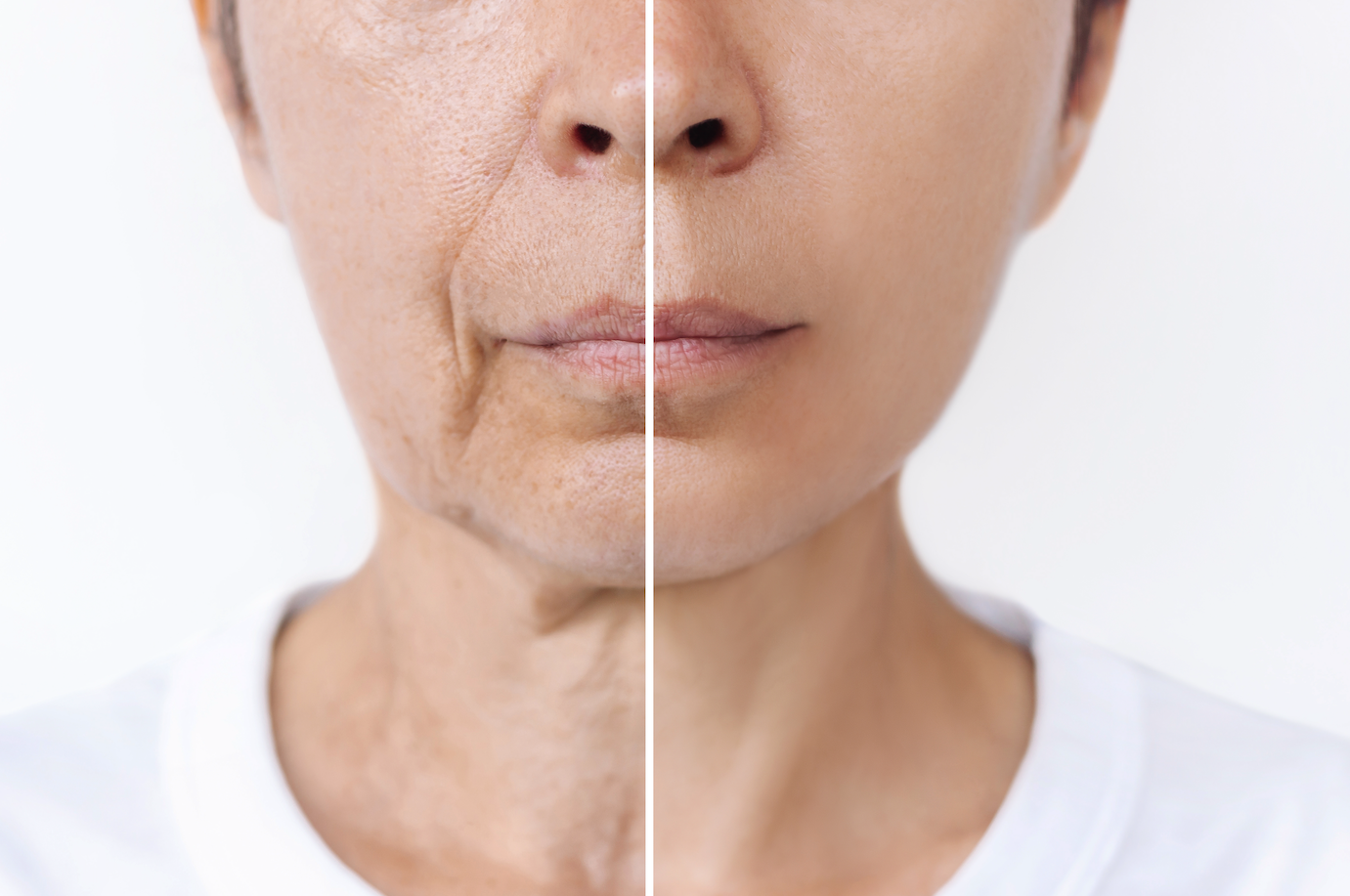
A mini facelift is designed for early, mild sagging along the jawline, using shorter incisions and a more limited lift. A full facelift is designed for moderate to advanced aging across the midface, jowls, and neck. The right choice depends less on your age than on where your tissues have descended and by how much, which is something a surgeon needs to assess in person.
Here is how the two compare, and why choosing the smaller procedure is not always the smaller decision.
Mini facelift vs. full facelift at a glance
What a mini facelift does, and what it does not
A mini facelift, sometimes called a short scar facelift, treats early aging in the lower face and jawline through shorter incisions and less extensive tissue repositioning. For a patient whose skin still has good elasticity and whose sagging is mild, it can restore a cleaner jawline with a lighter recovery.
What a mini facelift is not designed to do is correct significant sagging in the jowls, cheeks, or neck. Those changes come from deeper tissues that have descended over time, and they need a more extensive lift to address.
What a full facelift does
A full facelift provides comprehensive correction of the midface, lower face, and neck. It can address:
Sagging jowls and loss of jawline definition
Deep folds from the nose to the corners of the mouth
Lines running from the corners of the mouth toward the chin
Flattened cheeks from midface descent
Loose skin under the chin and vertical neck bands
At The Collins Center, Dr. Collins performs full facelifts using a deep plane technique. Instead of tightening skin and the underlying muscle layer separately, the deep plane approach releases supporting ligaments and lifts the deeper tissues of the face as one unit. Skin is then redraped with less tension, which helps avoid a pulled or “windblown” look. The procedure typically takes two to three hours under general anesthesia, and most patients go home the same day.
The American Society of Plastic Surgeons offers a helpful overview of facelift surgery and what it can and cannot change if you would like a broader introduction.

Signs a mini facelift may be enough
Your concern is mainly the jawline, and sagging is mild
Your neck looks smooth, without much loose skin or banding
Your skin still has good elasticity
You are seeing the first signs of change and want a modest refresh
Signs you may need a full facelift
Jowls are clearly visible and the jawline has lost its definition
You have loose skin under the chin or visible bands in the neck
Your cheeks look flatter or lower than they used to
Fillers and neuromodulators no longer give you the improvement you want
Why a mini facelift is not always the smaller decision
A mini facelift can be an excellent choice for the right patient. The problem arises when it is chosen for aging it was not designed to correct. If the midface and neck have descended significantly, a limited lift may leave you with a result that falls short of what you hoped for, and some patients end up considering a second procedure sooner than they expected.
That is why the goal of a consultation is not to sell a smaller or larger procedure. It is to match the procedure to the anatomy. At The Collins Center, Dr. Collins will tell you honestly which approach fits your face, including when surgery is not yet the right step.
What about a nonsurgical “liquid facelift”?
A so-called liquid facelift uses injectables such as dermal fillers and neuromodulators like Botox® Cosmetic to restore volume and soften lines. For patients with mild concerns who want minimal downtime, injectables can be a good starting point. They do not lift sagging skin or tissue the way surgery does, and their effects are temporary.
If you are weighing injectables against surgery, our article on facelift vs. fillers goes deeper, and our injector team can walk you through Botox® Cosmetic and filler options.
Recovery: how the two compare
Full facelift. Most patients have swelling and bruising for the first two weeks, with the majority of social healing within 10 to 14 days. You will keep your head elevated during this time. Many patients return to desk work within about two weeks, and strenuous exercise usually waits four to six weeks. Final results appear as residual swelling resolves over several months. Our facelift recovery guide covers this in more detail.
Mini facelift. Recovery is generally shorter because the procedure is less extensive, though you should still plan for swelling, bruising, and a period of limited activity. Your surgeon will give you a timeline based on your specific plan.
How Dr. Collins decides which approach fits you
During your consultation, Dr. Collins evaluates your face as a whole, including:
Where sagging is occurring: jawline only, or also the midface and neck
Skin thickness and elasticity
Underlying bone structure
Whether volume loss or excess skin is the main issue
Whether other areas, such as the eyelids or brow, affect the overall result
Because she performs an average of one to two facelifts a week, she can explain what each approach is likely to achieve for your anatomy specifically. You can also review examples in our facelift gallery.
What to do next
If you are deciding between a mini facelift and a full facelift, an in-person evaluation is the most reliable way to get a clear answer.
Ready to talk through your options? Schedule a consultation with Dr. Collins at the office closest to you:
Guilford: Willow Hall, 2614 Boston Post Road, Suite 16C, Guilford, CT 06437 · (203) 689-5295 · Book at Guilford
Mystic: 55 Willow Street, Mystic, CT 06355 · (860) 572-6868 · Book at Mystic
You can also start with our online consultation form.
Frequently asked questions
Is a mini facelift less expensive than a full facelift?
Generally, yes, because it is a less extensive procedure. Your actual cost depends on your plan, anesthesia, and the surgical facility. Our guide to facelift cost in Connecticut explains what goes into a quote.
Can I get a mini facelift in my 40s?
Possibly. Age matters less than the degree of change. Some patients in their 40s have mild jawline sagging that suits a mini facelift, while others are better served by injectables or, if aging is more advanced, a full facelift.
Does a mini facelift fix the neck?
A mini facelift offers little or no correction of loose neck skin or neck bands. If your neck is a main concern, a full facelift, which includes neck work, is usually the more appropriate option.
How long do facelift results last?
Results depend on the procedure, your skin, and how you age. A full facelift that repositions deeper tissues can provide long-lasting improvement, although your face will continue to age naturally over time. Ask your surgeon what to expect for your specific plan.
This article is for general education and is not medical advice. Results vary, and every procedure carries risks. A consultation with a board-certified plastic surgeon is the best way to learn which options are right for you.
About the author
Dr. Beth Collins is a double board-certified plastic surgeon, certified in both general surgery and plastic surgery, and the founder of The Collins Center in Guilford and Mystic, Connecticut. She completed her fellowship in plastic and reconstructive surgery at Emory University, followed by a specialty fellowship in breast shaping and body contouring. Dr. Collins has been in practice for more than 16 years and performs an average of one to two facelifts a week, with a focus on the deep plane technique. She is a clinical instructor who teaches cosmetic surgery to surgical residents at Yale, has spoken on panels at the American Society of Plastic Surgeons and the Women’s Plastic Surgery Conference, and has been named a Castle Connolly Top Doctor (2023–2024).